THE AESTHETICS OF THE TROLLEY: WHEN BEAUTY MATTERS MORE THAN FLAVOR (AND THE PLANET)
25.09.26
We should overcome the obsession with aesthetic perfection. We are used to choosing identical melons, tomatoes without spots, shiny apples and vegetables with a regular shape. But drought, heat and hailstorms can leave marks on the skin, reduce the size and make production more irregular.
A melon ruined outside is not necessarily a food to be discarded. Before judging it, a cosmetic defect must be distinguished from a safety issue or deterioration. Rejecting a product just because it's not perfect means wasting water, energy, labor and resources already used to cultivate it. Nature does not produce identical objects; to expect otherwise is as unrealistic as it is costly.
Data 2024-2025: waste is growing
According to the Waste Watcher International Observatory 2024 Report, presented in September 2024, food waste in Italy grew by 45.6% compared to the previous year: every Italian throws away 683.3 grams of food every week (compared to 469.4 grams in 2023). The most wasted foods are fresh fruit (27.1 g) and vegetables (24.6 g), followed by fresh bread, salads and onions/garlic/tubers.
The total economic value of food waste in 2024 amounts to about 14.1 billion euros, of which 8.2 billion in the domestic sector, about 1 billion in the agricultural sector (1.29 million tons), more than 850 million in the industrial sector and more than 4 billion in distribution. In the fruit and vegetable sector, there is significant waste already in the harvest phase due to the aesthetic Standard imposed by the market.
This waste has an enormous environmental impact. The production of food that is then discarded for aesthetic reasons is responsible for about 5% of greenhouse gas emissions. In Europe, 50 million tons of fruit and vegetables are thrown away for these reasons.
The issue of aesthetic Standard
A 2025 study by IULM University confirms that, despite awareness campaigns, aesthetic Standard remain a significant barrier for second-rate fruit and vegetables. The report highlights that “imperfect” fruits and vegetables are still being systematically excluded from large retailers or redirected to the processing industry at very low prices.
Associzioneterra's Food Generation project (2024-2025) launched a national campaign to combat food losses and waste, valuing second-rate fruits and vegetables often excluded from retail for aesthetic reasons. The initiative involves farms that are committed to not wasting and to marketing “ugly but good” products.
What hasn't changed.
Although the first experiments selling imperfect fruit and vegetables date back almost a decade ago (campaigns such as “Ugly Fruits and Vegetables” by Intermarché in France or “Cracks and Dents” by Coop in Italy), none of these projects have ever left the niche to become ordinary practice in the fruit and vegetable departments of large Italian retailers. The GDO continues to favor first-class products, educating the consumer to seek aesthetic perfection.
A concrete example: the El Tamiso cooperative
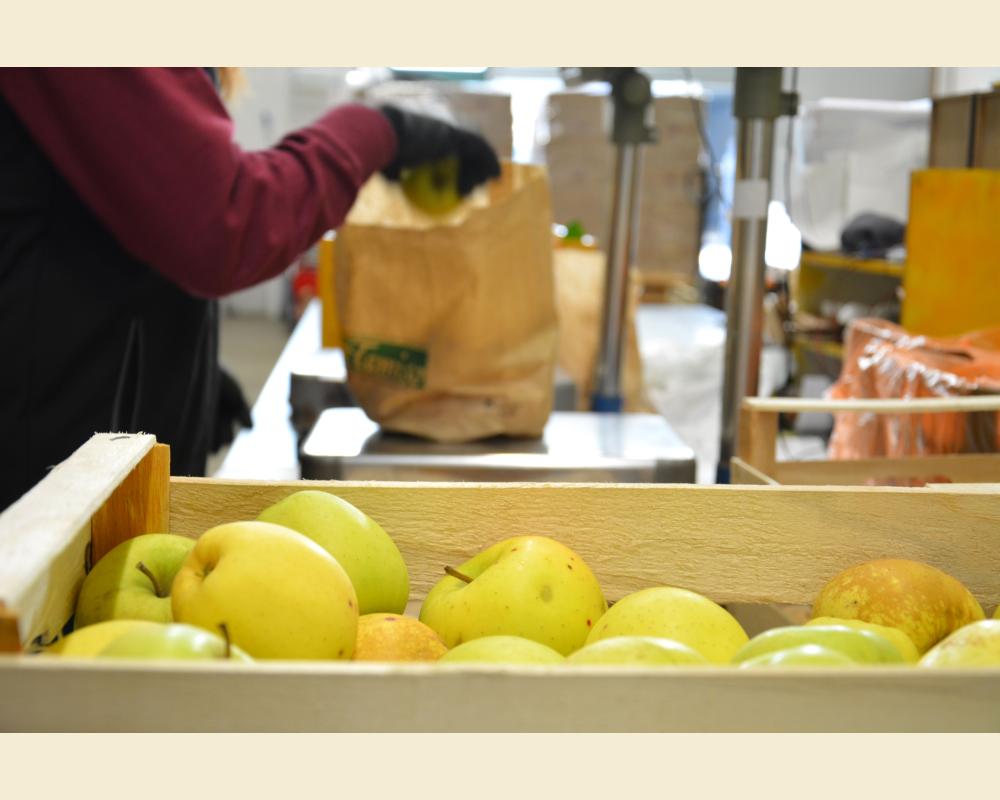
It has happened, over the years, to offer products with “aesthetic” problems but good and organoleptically unchanged. This is the case of Golden apples from Silvio Galeaz's Saorì company, in Dambel, in the mountains of Val di Non. A summer storm caused minor defects that made the product unattractive for traditional commerce.
We decided to help Silvio, offering Golden apples in the fruit and vegetable baskets that we offer to Solidarity Buying Groups (in 2 kg bags) at a reduced price, taking into account any waste. The operation was beneficial for everyone: for the producer, who recovers part of the value otherwise lost, and for consumers, who eat a quality apple (especially tasty those on the 700 meter range where Saorì is located) at a low price.
Updated data 2025
According to the most recent data presented at the 6th National Day of Awareness of Food Losses and Waste (September 2025), the average weekly waste in Italy amounted to 555.8 grams in summer 2025, down from 683 grams in August 2024, with significant regional differences: Central Italy is the most virtuous area (490.6 grams), while the South records 628.6 grams per week.
These data confirm that the issue of aesthetics as a criterion for selecting fruit and vegetables remains current and urgent, especially in a context of climate crisis that makes productions increasingly variable and “imperfect”.
Purchasing in a conscious way means accepting seasonality, valuing local productions and reducing waste, considering quality as a whole. When the supply chain is organized, imperfection can become value.
A melon ruined outside is not necessarily a food to be discarded. Before judging it, a cosmetic defect must be distinguished from a safety issue or deterioration. Rejecting a product just because it's not perfect means wasting water, energy, labor and resources already used to cultivate it. Nature does not produce identical objects; to expect otherwise is as unrealistic as it is costly.
Data 2024-2025: waste is growing
According to the Waste Watcher International Observatory 2024 Report, presented in September 2024, food waste in Italy grew by 45.6% compared to the previous year: every Italian throws away 683.3 grams of food every week (compared to 469.4 grams in 2023). The most wasted foods are fresh fruit (27.1 g) and vegetables (24.6 g), followed by fresh bread, salads and onions/garlic/tubers.
The total economic value of food waste in 2024 amounts to about 14.1 billion euros, of which 8.2 billion in the domestic sector, about 1 billion in the agricultural sector (1.29 million tons), more than 850 million in the industrial sector and more than 4 billion in distribution. In the fruit and vegetable sector, there is significant waste already in the harvest phase due to the aesthetic Standard imposed by the market.
This waste has an enormous environmental impact. The production of food that is then discarded for aesthetic reasons is responsible for about 5% of greenhouse gas emissions. In Europe, 50 million tons of fruit and vegetables are thrown away for these reasons.
The issue of aesthetic Standard
A 2025 study by IULM University confirms that, despite awareness campaigns, aesthetic Standard remain a significant barrier for second-rate fruit and vegetables. The report highlights that “imperfect” fruits and vegetables are still being systematically excluded from large retailers or redirected to the processing industry at very low prices.
Associzioneterra's Food Generation project (2024-2025) launched a national campaign to combat food losses and waste, valuing second-rate fruits and vegetables often excluded from retail for aesthetic reasons. The initiative involves farms that are committed to not wasting and to marketing “ugly but good” products.
What hasn't changed.
Although the first experiments selling imperfect fruit and vegetables date back almost a decade ago (campaigns such as “Ugly Fruits and Vegetables” by Intermarché in France or “Cracks and Dents” by Coop in Italy), none of these projects have ever left the niche to become ordinary practice in the fruit and vegetable departments of large Italian retailers. The GDO continues to favor first-class products, educating the consumer to seek aesthetic perfection.
A concrete example: the El Tamiso cooperative
It has happened, over the years, to offer products with “aesthetic” problems but good and organoleptically unchanged. This is the case of Golden apples from Silvio Galeaz's Saorì company, in Dambel, in the mountains of Val di Non. A summer storm caused minor defects that made the product unattractive for traditional commerce.
We decided to help Silvio, offering Golden apples in the fruit and vegetable baskets that we offer to Solidarity Buying Groups (in 2 kg bags) at a reduced price, taking into account any waste. The operation was beneficial for everyone: for the producer, who recovers part of the value otherwise lost, and for consumers, who eat a quality apple (especially tasty those on the 700 meter range where Saorì is located) at a low price.
Updated data 2025
According to the most recent data presented at the 6th National Day of Awareness of Food Losses and Waste (September 2025), the average weekly waste in Italy amounted to 555.8 grams in summer 2025, down from 683 grams in August 2024, with significant regional differences: Central Italy is the most virtuous area (490.6 grams), while the South records 628.6 grams per week.
These data confirm that the issue of aesthetics as a criterion for selecting fruit and vegetables remains current and urgent, especially in a context of climate crisis that makes productions increasingly variable and “imperfect”.
Purchasing in a conscious way means accepting seasonality, valuing local productions and reducing waste, considering quality as a whole. When the supply chain is organized, imperfection can become value.
PREVIOUS ARTICLE
24. 09. 26
24.09.26
DO WE REALLY KNOW THE PRICE OF FOOD?
Climate, agriculture and economy are part of the same system.
Read